Ancient Grazing Rights or Pagan Sun Worship?
Historical records first mention the cheese-rolling race in 1826 in an official message to the Gloucester town crier, but local folklore suggests the custom dates back over six centuries. Two primary theories dominate anthropological discourse:
First, the event may have originated as a pagan fertility rite held at midsummer, where burning brushwood wheels and rolled cheeses symbolized the journey of the sun across the heavens, blessing the soil for a bountiful crop. Second, local commoners may have held the race to maintain grazing and foraging rights on the surrounding common land.
The Physics of the Race
The cheese utilized is an authentic 8-pound (3.6 kg) circular disc of Double Gloucester cheese, crafted by hand by master cheesemaker Diana Smart and her family for over 25 years. The Master of Ceremonies releases the cheese down the hill with a one-second head start.
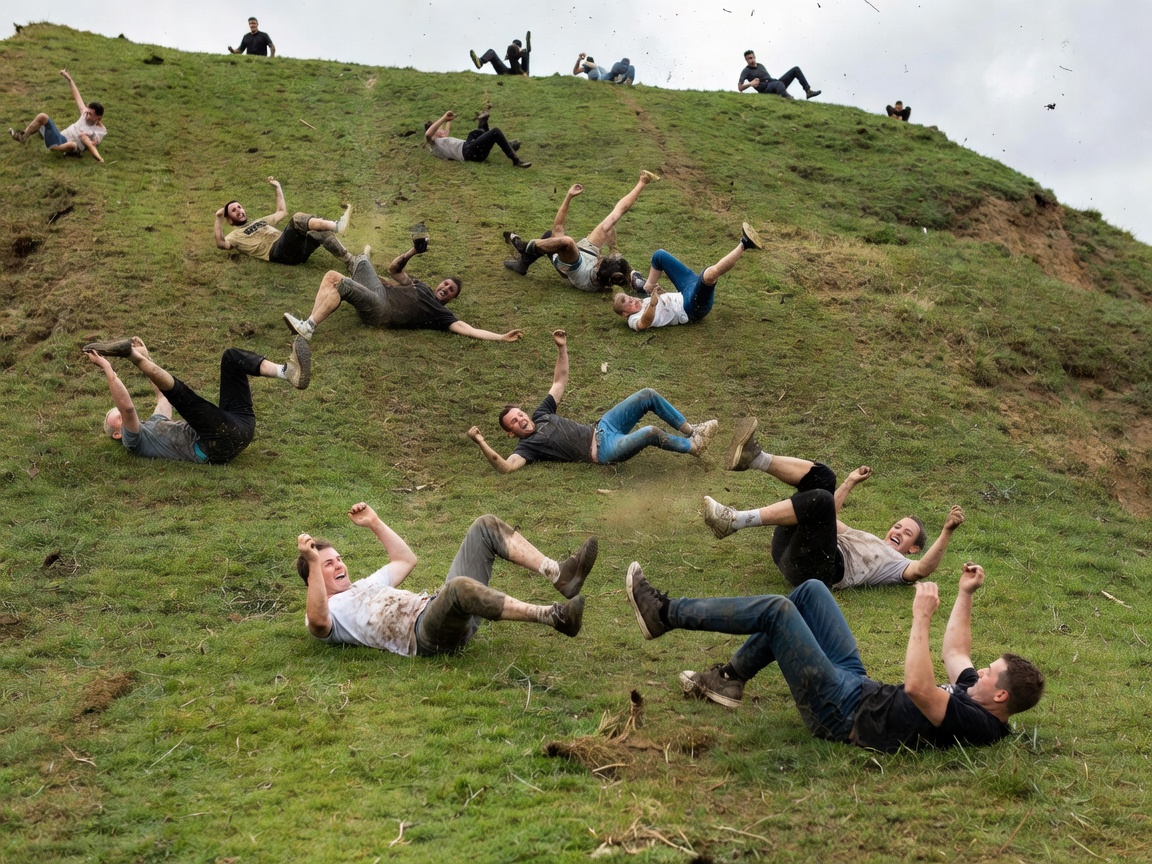
Because of the concave 50% drop, the cheese rapidly bounces and reaches speeds exceeding 70 mph (112 km/h)—fast enough to break limbs if it strikes spectators. Moments later, up to 40 competitors plunge down the uneven, grass-covered mud bank. Given the angle, running on two feet is virtually impossible for more than three strides; racers flip, tumble, and somersault until colliding with a line of volunteer rugby players at the base who act as the human catch fence.
The Legendary Champions
Local legend Chris Anderson holds the all-time world record, having secured 22 cheese wheels over a 15-year career of racing down Cooper's Hill despite suffering a broken ankle, torn calf muscles, and a bruised kidney. In the women's category, international athletes from the United States, Australia, and Japan frequently claim the Double Gloucester crown.
Official Spectator & Safety Information
While the official commercial organization ceased in 2010 due to insurance liabilities, the event continues spontaneously as an authentic community-led tradition.