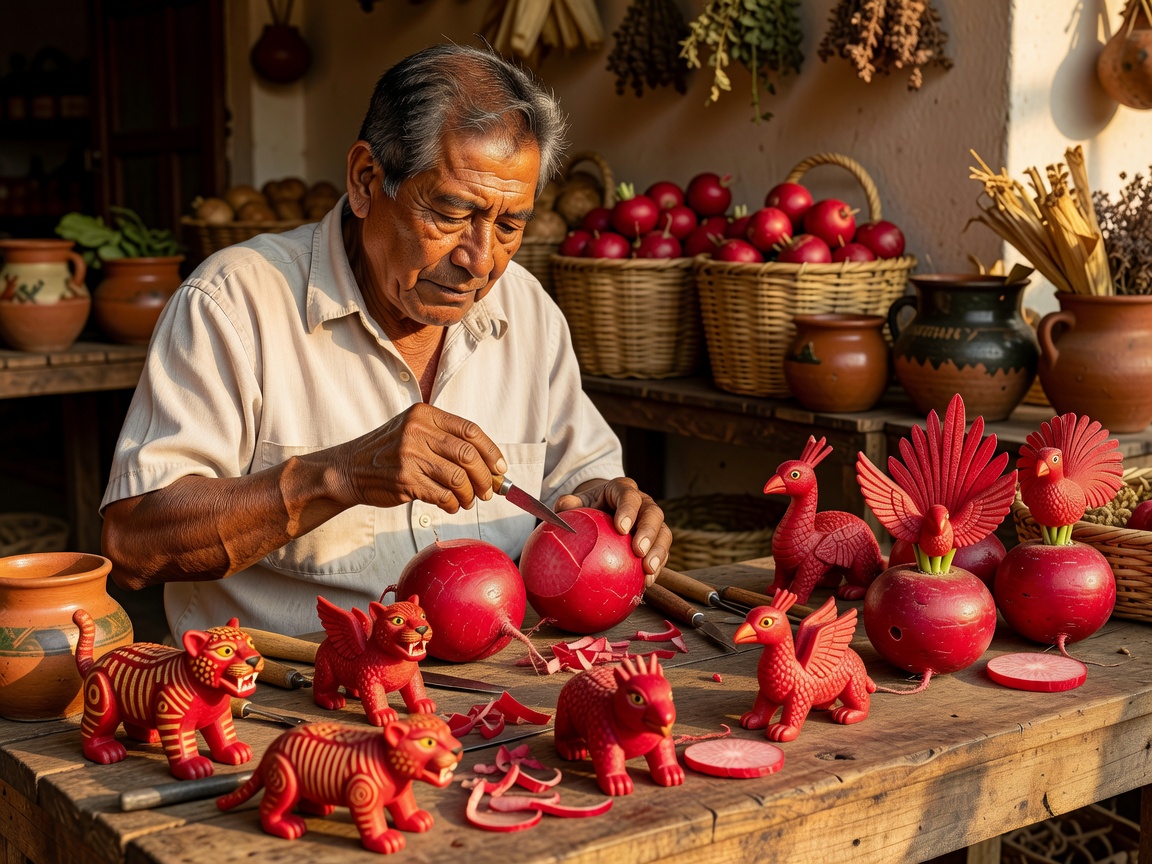
How Spanish Root Vegetables Became Indigenous Art
Radishes (Raphanus sativus) were introduced to the Americas by Spanish friars in the 16th century. In the fertile agricultural valleys of Oaxaca, indigenous Zapotec and Mixtec farmers cultivated them extensively.
To attract Christmas shoppers to their produce stalls on the eve of Christmas Eve, farmers began carving radishes into eye-catching figurines, animals, and biblical figures. In 1897, Oaxaca Mayor Francisco Vasconcelos Flores was so enchanted by the craftsmanship that he founded an official annual civic competition.
Cultivation of the Monster Radishes
These are not the small, crisp radishes found in salad bowls. The municipality reserves dedicated agricultural plots near El Tequio park, using heavy fertilizer and late harvesting schedules to grow mutant, heavily knotted radishes up to 20 inches long and weighing nearly seven pounds. Because the wood-like roots turn black and dry within hours of being peeled and cut, artists work furiously under the Zócalo tents on the morning of December 23rd using precision scalpels, toothpicks, and damp towels.
Competitive Categories & Prizes
- Traditional Category: Dioramas featuring the Nativity, the Virgin of Juquila, Guelaguetza dancers, and Dia de los Muertos calaveras.
- Free Art Category: Modern contemporary interpretations, Mesoamerican cosmological figures, and revolutionary heroes.
- Corn Husk & Dried Flower Division: Parallel artisan categories utilizing totomoxtle (corn husks) and flor inmortal.
Official Links & Tourism
Lines to enter the Zócalo viewing corridor can stretch several city blocks; visitors are advised to queue by 4:00 PM.